
CBRNe Solutions

High-Precision Food Nuclear Contamination Detection System
The food nuclear contamination detection system is designed for high-precision screening of radiological and nuclear contamination in food, cargo and inspection samples. It uses thick integrated lead shielding to reduce background radiation interference and a high-sensitivity scintillator with multi-channel energy-spectrum identification for trace nuclide detection.
It is suitable for customs, food safety, drug inspection, environmental protection, inspection and quarantine, and emergency-response agencies.


REBIO provides a comprehensive range of early-warning, detection, identification and response systems for CBRNe threats. Our solutions cover handheld detection, fixed-site monitoring, vehicle and marine deployment, intelligent management software and unmanned-platform integration.
From single-item detection to multi-threat systems and complete CBRNe solutions, we work with qualified partners to match equipment configuration with the actual threat scenario, operating environment and user requirement.
Portable and modular CBRNe detection devices can be integrated with unmanned platforms such as UGVs, UAVs and unmanned vessels, allowing operators to monitor potentially hazardous areas while reducing direct human exposure.
For high-risk field missions, UGV-based CBRNe detection can combine ground mobility, remote operation, sensor payloads and emergency-response support in one deployable platform.
In the process of transition from a unipolar world to a multipolar world, both inter-regional wars and conflicts between different political groups within a region have been increasing in number and frequency, and the means of conflict have become increasingly covert. As warfare today continues to face more diverse, intelligent, and evolving hazards and threats than ever before, our monitoring and early-warning solutions provide users with a strategic advantage in the fight against invisible threats – good situational awareness being essential for fast and sensible decision-making, tailored to field reality.
Our innovation DNA, combined with our great flexibility, enables us to develop new technologies and on-demand CBRNe systems, as close as possible to the operational requirement of the end users. We continue to work closely with worldwide partners, constantly innovating, enabling you and your teams to stay one step ahead.
300+
Patents & Copyrights
TOP
Asian CBRNe Solution Provider
1,000+
International Events
Application Scenarios
Industrial
Chemical
Transportation
Emergency Rescue
Epidemic Diseases Controlling
Law Enforcement
Custom
VIP Safety
Homeland Security
Products & Solutions

Single-item detection

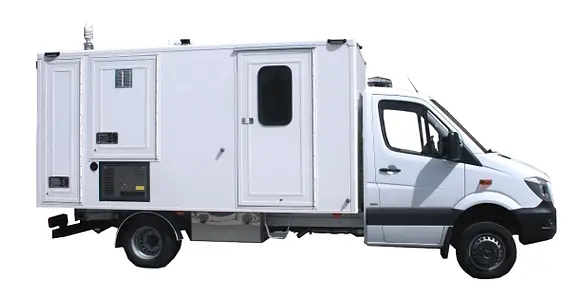
Multi-item detection


Intelligent management software platform
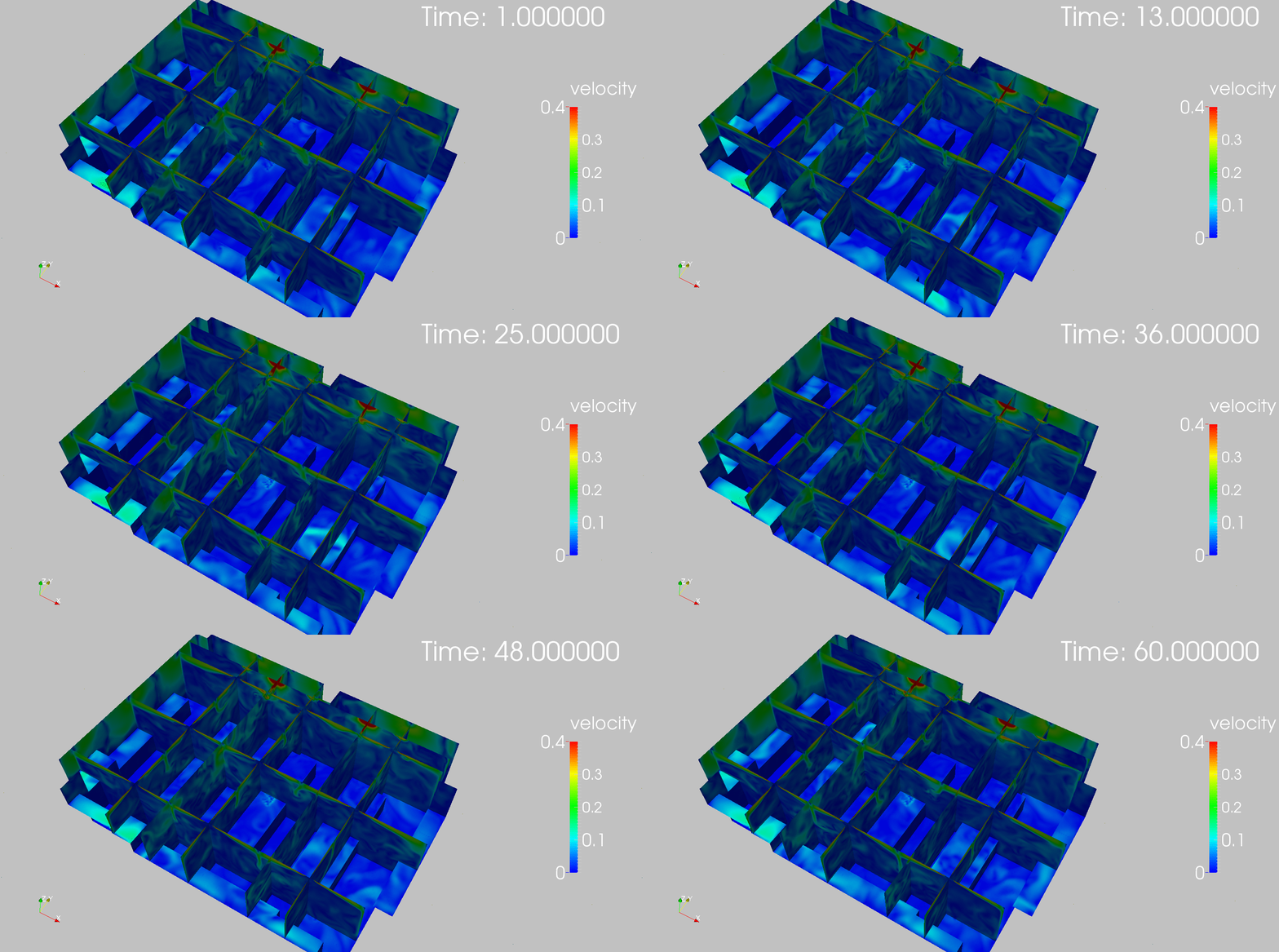
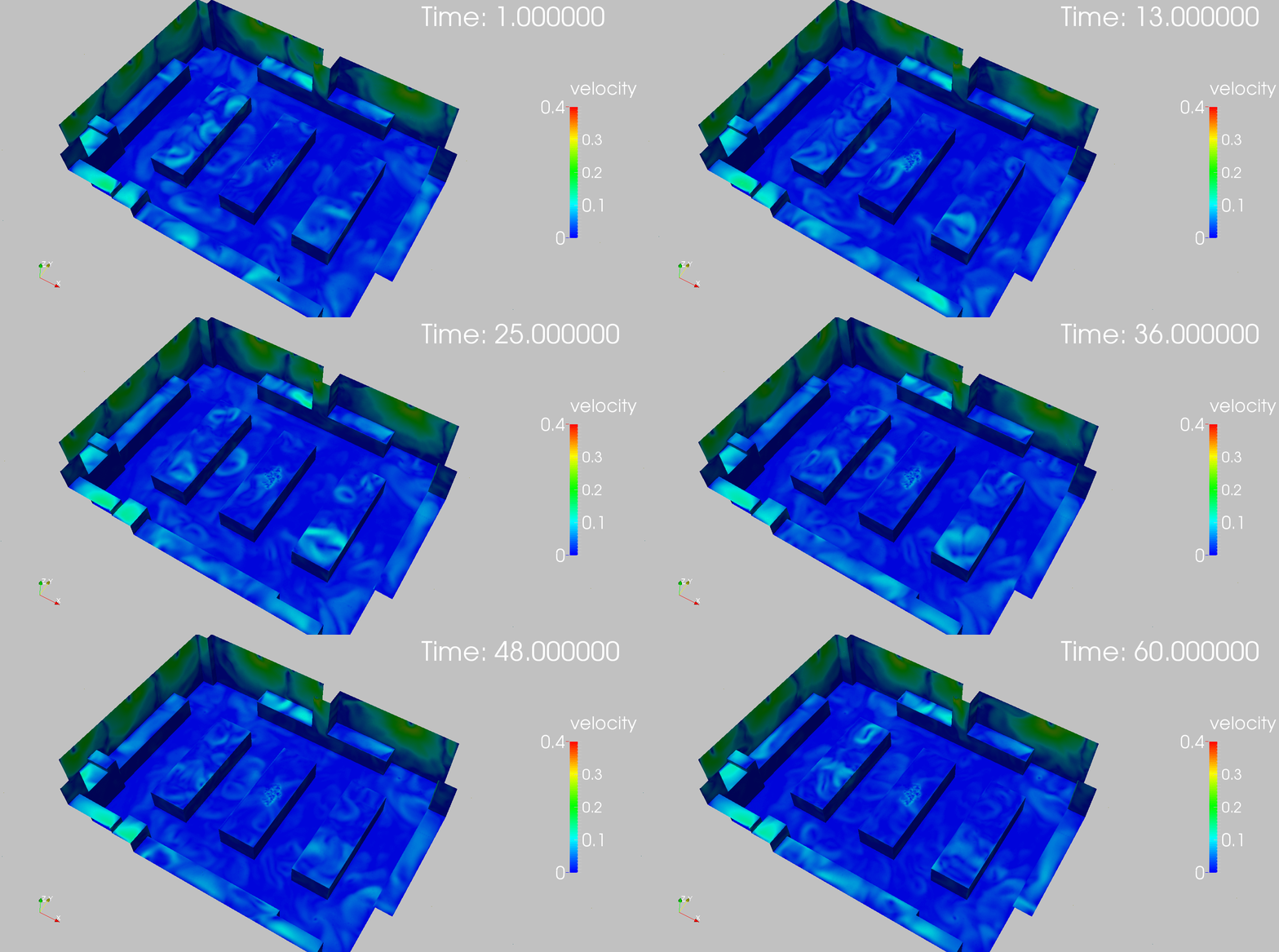
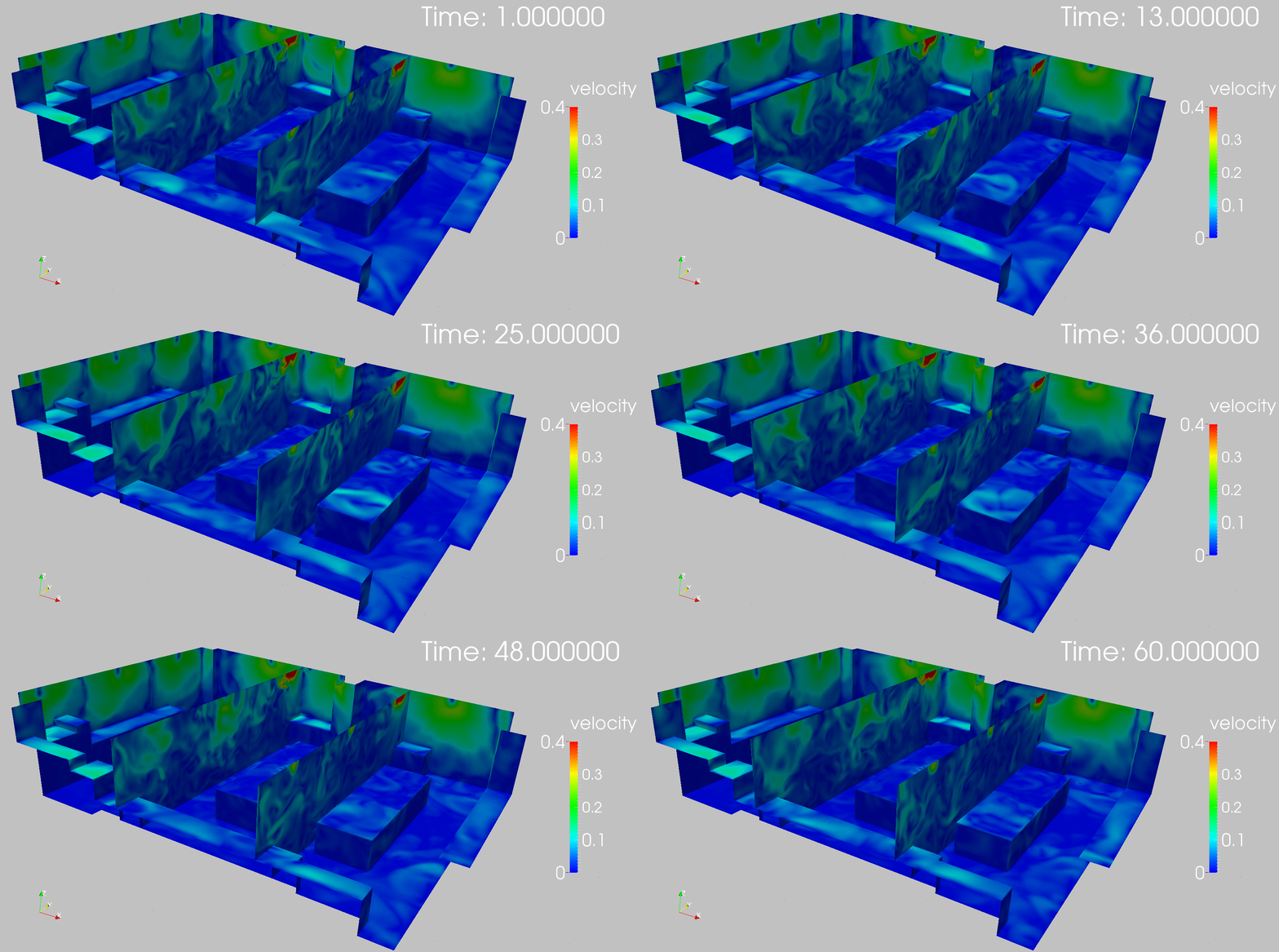



AI CBRNe solution workstation
Served Events




CBRNe Vehicle/Marine Solution

VIP CBRNe Shelter
01
Risk Assessment & Analysis
02
Protection Plan Development
03
On-site Training & Emergency Drills
04
Security Equipment & Technical Support
05
Threat Detection & Emergency Response
What is CBRNe?
CBRNe stands for Chemical, Biological, Radiological, Nuclear and Explosives. The term is used to describe threats, incidents and response scenarios involving hazardous materials, industrial accidents, terrorism, contamination events or explosive risks.
CBRNe defence includes activities, processes, and solutions designed to mitigate the risks of these incidents and protect against the impacts they may cause. In many countries, CBRNe equipment and solutions, Drone & Anti-Drone, Unmanned Ground Vehicles (UGVs) and Cyber Range are listed as Police Supplies.
What is a CBRNe threat?
A CBRNe threat occurs when chemical, biological, radiological, nuclear or explosive material is released, or has the potential to be released, in a dangerous way. Such hazards may come from industrial accidents, poor safety management, transportation incidents, public-security threats or malicious actors.
CBRNe and hazmat incidents are difficult to detect and manage because they may be invisible, fast-moving and highly damaging to people, infrastructure and economic activity. Urban environments, transportation hubs, ports, public events and critical facilities are especially sensitive scenarios.

*Because of national and personal privacy concerns, the real names in above successful stories cannot be displayed.