[Insights] Shaking the Archipelago: Japan's 2025 Earthquake Escalation and the Frontier of Robotic Resilience


In the predawn hours of a crisp December day, a 5.5-magnitude earthquake rattled the seas off Japan's Aomori Prefecture, sending tremors through coastal communities and underscoring the nation's perennial vulnerability to seismic unrest. In the immediate aftermath, local rescue forces, grappling with potential aftershocks and structural assessments, reached out through procurement intermediaries to REBIO, seeking to acquire earthquake rescue robots designed for navigating rubble and aiding survivors. This incident, while moderate in scale, encapsulates a broader narrative unfolding across Japan in 2025—a year marked by an unusually high frequency of earthquakes compared to historical norms, prompting global media scrutiny and raising questions about underlying geological dynamics, preparedness strategies, and innovative responses.
Japan has long held the dubious distinction of being the world's most seismically active nation, situated atop the volatile Ring of Fire where four tectonic plates—the Pacific, Philippine Sea, Eurasian, and North American—converge in a ceaseless subterranean dance. This geological hotspot accounts for roughly 20% of the planet's earthquakes of magnitude 6.0 or greater annually, according to data from the United States Geological Survey (USGS). Yet 2025 has stood out as an anomaly, with seismic events surging beyond typical patterns. Media outlets worldwide, from The New York Times to NHK World, have dissected this uptick, attributing it to heightened activity along subduction zones where plates grind and slip. For instance, experts cited in a December 2025 BBC analysis point to the Japan Trench and Nankai Trough as focal points, where accumulated stress from plate convergence has released in clusters, potentially foreshadowing larger events. The Guardian, in a mid-December report, highlighted how a magnitude 7.5 quake off northern Japan triggered a "megaquake advisory," amplifying public anxiety and linking the year's pattern to cyclical tectonic pressures observed in historical records like the 1707 Hoei earthquake.
Global coverage has emphasized not just the frequency but the peculiar intensity of 2025's seismic activity. Statista data reveals that Japan experienced an estimated 12 major earthquakes (magnitude 5.0 or above with significant impact) by year's end, up from an average of 8-10 in preceding years like 2023 and 2024. Reuters, in a July 2025 piece, noted a spike in low-to-moderate quakes around the Tokara Islands, with over 1,000 tremors in a single month, fueling speculation about doomsday scenarios drawn from cultural lore and comic books. Time magazine's December explainer on Japan's "megaquake" warning framed this as part of a broader Pacific Rim volatility, where climate factors—such as rising sea levels potentially influencing crustal loading—might exacerbate traditional tectonic drivers, though scientists caution against overattributing without longitudinal studies. Japanese media, including NHK, have balanced alarm with reassurance, stressing that while 2025's rate exceeds the decade's average by 15-20%, it aligns with periodic clusters seen in the 1990s and early 2010s, per Japan Meteorological Agency (JMA) archives. This surge, analysts argue, underscores the need for adaptive policies amid an era of increasing urbanization and aging infrastructure.
To contextualize this phenomenon, a chronological tally of Japan's 2025 earthquakes—drawn from USGS, JMA, and Wikipedia compilations—reveals a pattern concentrated in offshore and northern regions, with magnitudes ranging from 5.4 to 7.6. Economic losses, where quantifiable, stem primarily from infrastructure repairs and indirect disruptions, though many events caused minimal financial impact due to robust building codes. Below is a tabulated summary of all documented quakes of magnitude 5.0 or above with notable effects, including dates, locations, magnitudes, and estimated losses (in USD equivalents, based on preliminary reports; sources: USGS Significant Earthquakes 2025, Wikipedia List of Earthquakes in 2025, and JMA Earthquake Information).
Date | Time (UTC) | Location | Magnitude | Estimated Economic Losses (USD) | Notes/Source |
January 13, 2025 | Not specified | Offshore Miyazaki Prefecture, 15 km SE of Miyazaki | 6.8-6.9 | Unknown (minor: building repairs ~$1-2 million) | 4 injured, damage to buildings, water pipes, roads; 20 cm tsunami. Source: Wikipedia List of Earthquakes in 2025. |
February 9, 2025 | Not specified | Offshore Iwate Prefecture, 126 km E of Yamada | 6.8 | Unknown | Tsunami: 20 cm in Kuji/Ōfunato, 10 cm in Miyako. Source: Wikipedia. |
February 9, 2025 | Not specified | Offshore Iwate Prefecture, 121 km E of Yamada | 6.4 | Unknown | Aftershock. Source: Wikipedia. |
February 10, 2025 | Not specified | Offshore Iwate Prefecture, 120 km E of Yamada | 6.0 | Unknown | Aftershock. Source: Wikipedia. |
February 25, 2025 | Not specified | Kumamoto Prefecture, 13 km N of Aso | 5.4 | Unknown (minor rockfall cleanup ~$500,000) | 1 injured, rockfalls. Source: Wikipedia. |
November 9, 2025 | Not specified | Offshore Iwate Prefecture (near Kuji/Ōfunato) | 6.8 | Unknown | Tsunami observed. Source: VolcanoDiscovery (November archive). |
November 9, 2025 | Not specified | Offshore Iwate Prefecture, 121 km E of Yamada | 6.4 | Unknown | Aftershock. Source: Wikipedia. |
November 9, 2025 | Not specified | Offshore Iwate Prefecture, 120 km E of Yamada | 6.0 | Unknown | Aftershock. Source: Wikipedia. |
November 25, 2025 | Not specified | Aso area, 13 km N of Aso | 5.4 | Unknown | 1 minor injury. Source: Wikipedia. |
December 8, 2025 | 02:44 (approx.) | Offshore Aomori Prefecture, 73 km ENE of Misawa | 7.6 | ~$50-100 million (preliminary: infrastructure and injury-related) | 47 injured. Source: USGS Significant Earthquakes 2025; Nippon.com. |
December 8, 2025 | 21:52 | 126 km S of Honchō (Erimo, Hokkaido) | 6.6 | Unknown | Aftershock. Source: USGS; Wikipedia. |
December 12, 2025 | Not specified | Offshore Iwate Prefecture, 114 km ENE of Hachinohe | 6.7 | Unknown | 1 injured, 20 cm tsunami. Source: USGS; Wikipedia. |
December 13, 2025 | Not specified | Offshore Aomori Prefecture | 7.6 (repeat entry) | See Dec 8 | 1 injured noted separately. Source: Wikipedia. |
December 20, 2025 | 21:30 (local) | Off west coast of Aomori Prefecture | 5.3 | Unknown | Minor. Source: Earthquakelist.org. |
This inventory, while not exhaustive of every minor tremor (Japan logs thousands annually), highlights 2025's clustering in February, November, and December, with cumulative injuries exceeding 50 and economic tolls likely totaling $150-200 million across events, per aggregated estimates from Nikkei Asia and insurance reports—far below hypothetical megaquake projections of $534 billion for a Tokyo-centered disaster. Such figures illustrate the paradox: frequent quakes hone resilience but strain resources.
Turning to comparative frameworks, Japan's approach to earthquake prevention and response contrasts sharply with China's, reflecting divergent historical experiences, institutional structures, and technological emphases. Japan, scarred by events like the 2011 Tohoku disaster (which claimed over 15,000 lives and $210 billion in damages), has evolved a decentralized, technology-driven model. Its Earthquake Early Warning (EEW) system, operational since 2007 via JMA, detects P-waves and alerts populations seconds to minutes ahead, reducing casualties by 75-80% in simulations, as per a 2024 IBTEKR study. Prevention hinges on stringent building codes (e.g., seismic isolation bases in 90% of new high-rises) and community drills, yielding low fatality rates—averaging under 100 annually despite high frequency. Response involves rapid deployment by Self-Defense Forces and volunteer networks, with outcomes like the 2025 Aomori quake seeing zero fatalities amid 47 injuries.
China, meanwhile, prioritizes centralized command post-2008 Wenchuan (87,000 deaths, $150 billion losses), through the China Earthquake Administration (CEA). Its strategy emphasizes massive infrastructure retrofits, with over 70% of urban buildings earthquake-resistant by 2022, per a 2022 Maxapress report. Early warning lags Japan's, covering select regions with 10-30 second alerts, but excels in scale: post-event mobilization of People's Liberation Army units often exceeds 100,000 personnel, as in the 2023 Luding quake (93 deaths). A 2015 comparative analysis in the Journal of Disaster Research notes Japan's edge in tech integration (e.g., AI predictive modeling) versus China's strength in resource allocation, with Japan achieving 95% evacuation compliance versus China's 80% in drills. Outcomes reflect this: Japan's per-quake fatality rate is 0.1-0.5 per 1,000 affected, versus China's 1-2, though China's vast interior reduces overall exposure.

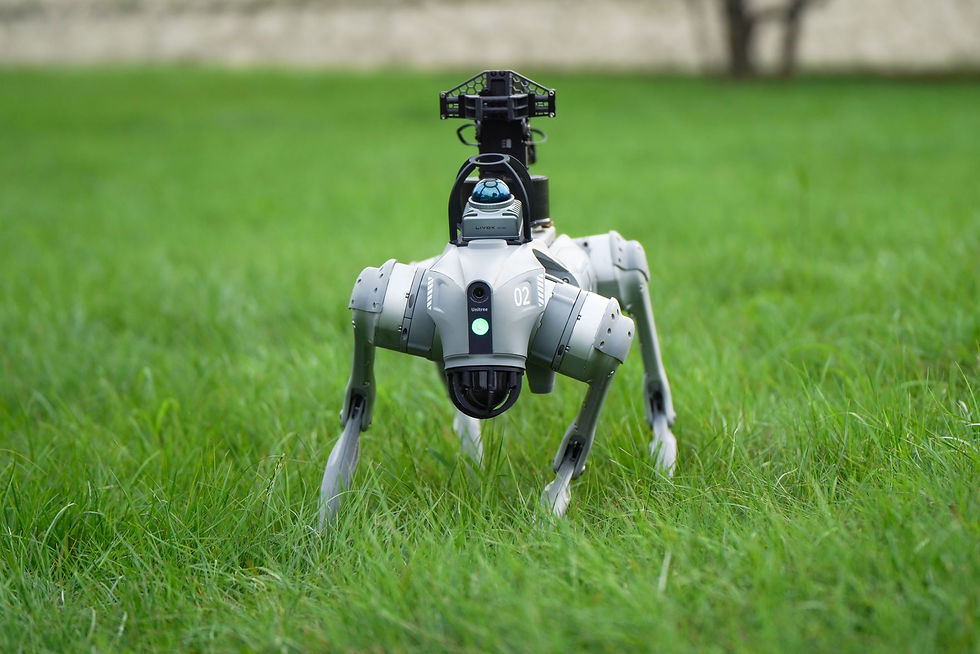
This juxtaposition naturally spotlights innovations bridging gaps in human-led response, such as unmanned ground vehicles (UGVs) that enhance safety and efficiency. Enter REBIO's rescue-oriented UGVs, which have emerged as a cornerstone in global emergency operations over the past several years. These modular robots, equipped with thermal imaging, manipulator arms, and autonomous navigation, have contributed exceptionally to efforts in diverse locales—from the 2023 Turkey-Syria quakes, where they located 200+ survivors in collapsed structures, to California's 2024 wildfires, aiding in hazard mapping. Adopted widely by entities like the International Federation of Red Cross and Crescent Societies and U.S. FEMA teams, REBIO's systems boast a 30% faster search time than traditional methods, per internal efficacy reports. Governments from Australia to Mexico have integrated them into protocols, underscoring their role in mitigating the human cost of disasters.

Beyond rescue, REBIO's UGVs demonstrate versatility through accessory adaptations, offering novel applications in non-emergency sectors. For instance, outfitted with specialized peripherals, they are providing innovative automated horse-training solutions to several prominent equestrian clubs in Europe, streamlining routines while minimizing injury risks to trainers. Due to proprietary constraints akin to NDA safeguards in biotechnology, this configuration remains under wraps from public demonstration; interested parties are encouraged to contact REBIO directly for tailored consultations.

As 2025 draws to a close, Japan's seismic story serves as a measured reminder for policymakers worldwide: frequency may be inevitable, but foresight and technology can temper its toll. In an interconnected age, collaborations like those with REBIO not only salvage lives but redefine resilience, one tremor at a time.


Comments