[Editorial] Humanoid Robots: A New Frontier in Manufacturing Transformation

Updated: Mar 17

In 2026, the humanoid robot industry stands at a pivotal juncture, representing not just an extension of science fiction concepts but a catalyst for profound changes in global manufacturing and labor markets. According to the International Federation of Robotics (IFR) report released in January 2026, the global industrial robot installation market has reached a historic high of $16.7 billion, with humanoid robots emerging as a key subcategory transitioning from laboratory validation to industrial-scale applications. This development has sparked widespread discussions: Could humanoid robots effectively alleviate labor shortages and reshape supply chain efficiencies?
The current state of the global humanoid robot industry reveals robust growth momentum. As outlined in IDTechEx's "Humanoid Robots 2026-2036: Technologies, Markets, and Opportunities" report, the market is projected to reach $29.5 billion by 2036, with a compound annual growth rate approaching 50%. In 2025, global humanoid robot shipments totaled approximately 13,000 to 18,000 units, generating about $440 million in revenue, while 2026 estimates suggest shipments surging to 51,000 units, potentially scaling the market to $4 billion to $5 billion (based on Goldman Sachs and Robozaps projections). This expansion is largely driven by advancements in embodied artificial intelligence (AI) and initial deployments in sectors like automotive, logistics, and household applications.
Regionally, the Asia-Pacific area dominates the humanoid robot landscape. Fortune Business Insights reports that in 2025, the region held 42.6% of the global humanoid robot market share, expected to expand further in 2026, with China, Japan, and South Korea leading in industrial robot installations, accounting for 52% of the global total, a significant portion, and a notable share respectively. For instance, China's annual industrial robot installations reached 290,300 units in 2022, with a robot density (robots per 10,000 workers) of 470, far surpassing the U.S. figure of 295 (IFR data). The following table summarizes market projections for key regions (data sourced from Fortune Business Insights, 2026 estimates):
Region | 2026 Market Size (USD Billion) | Key Drivers |
Asia-Pacific | Approx. 2.68 (Dominant) | Government investments, aging populations, active startups |
North America | Approx. 1.16 | R&D investments, academic innovations |
Europe | Approx. 0.85 | Manufacturing automation, labor shortages |
Others | Approx. 0.91 | Expansion in emerging markets |
This table highlights China's leading position in humanoid robot shipments: In 2025, China accounted for the majority of global humanoid robot shipments, with projections indicating a national robot total of 648 million units by 2050 (Humanoid Global report). However, the humanoid robot sector still faces hurdles, such as high hardware costs and data standardization issues. Goldman Sachs anticipates the global humanoid robot market could hit $38 billion by 2035, contingent on supply chain optimizations and AI training breakthroughs.
Against this backdrop, several key developments in humanoid robots merit exploration. At the 2026 CES exhibition, leading models on display included Tesla's Optimus Gen 2, 1X's NEO, Boston Dynamics' Electric Atlas, and Unitree's G1, which have demonstrated flexibility in warehouse and manufacturing pilots (Humanoid Robotics Technology report). Industry observers note, however, that widespread adoption of humanoid robots may still require three to five years to ensure reliability and cost-effectiveness (Gasgoo report). These figures suggest humanoid robots are shifting from conceptual proofs to practical implementations, though their broader economic impacts warrant ongoing observation.
The trajectory of humanoid robot development can be glimpsed through recent landmark events. For example, the robot performance at China's Spring Festival Gala has drawn attention, prompting discussions about the technology's core nature: Does it signify a true awakening in embodied AI, or is it confined to masterful motion control? Video analyses indicate that the "drunken fist" routine showcased precise replication of complex movements by humanoid robots, but this relies more on pre-programmed path planning rather than real-time environmental comprehension. Such contrasts underscore a central challenge in the humanoid robot field: the shift from rigid tasks to flexible operations.
Delving deeper into this transition, a significant breakthrough has emerged in CATL's factories. In 2025, CATL deployed humanoid robots on its production lines to handle end-of-line (EOL) testing for battery packs, including the insertion of high-voltage plugs. This operation involves precise handling of hundreds of volts, achieving success rates over 99% and daily outputs equivalent to three times that of human labor. This advancement marks a breach in a long-standing barrier for industrial robots over the past 70 years—managing flexible operations like deformable objects or irregular assemblies. Previously, half of manufacturing tasks depended on manual labor, contributing to annual labor costs exceeding $50 billion in global automotive wire harness assembly. Now, this humanoid robot application could serve as a reference for similar sectors, though its robustness in variable environments remains to be verified.

The strategic implications of this humanoid robot breakthrough should be examined within broader geopolitical and economic contexts. The Russia-Ukraine conflict, for instance, has highlighted how production speed, rather than weapon sophistication, can determine outcomes in modern warfare. In 2024, Russia's artillery shell output was three times that of the U.S. and Europe combined, a disparity partly amplified by human variables: global aging populations and skilled labor shortages, with declining birth rates in China and technician shortages in the U.S. Humanoid robots, through 24-hour uninterrupted operations, could potentially double capacities without factory expansions. Particularly in flexible tasks like drone and missile assembly, where China leads as the world's largest drone producer (annual output of one million units), the multiplier effect of humanoid robots could grow exponentially. This perspective suggests that policymakers should consider how humanoid robots might enhance defense industry supply chain resilience.

The competition between the U.S. and China in humanoid robots focuses more on acquiring physical world data than on chip technology alone. The bottleneck for embodied AI lies in real "dirty data"—long-tail data from factory environments, such as wear and tear or tolerance drifts. China possesses the world's largest data "mine": over 35,000 smart factories and 2 million industrial robots, with production lines iterating frequently (minor changes every three months, major ones every six). In contrast, U.S. data from Tesla's Full Self-Driving (FSD) aids visual perception but struggles with "hand" force feedback issues. Experts like Unitree founder Wang Xingxing observe that the Spring Gala performance represents "a victory in motion control, not an awakening in embodied AI"—humanoid robots know how to avoid falling but not that they are "punching." This view implies China's data advantage could translate into a competitive lever, though balancing data sharing with privacy protections is essential.
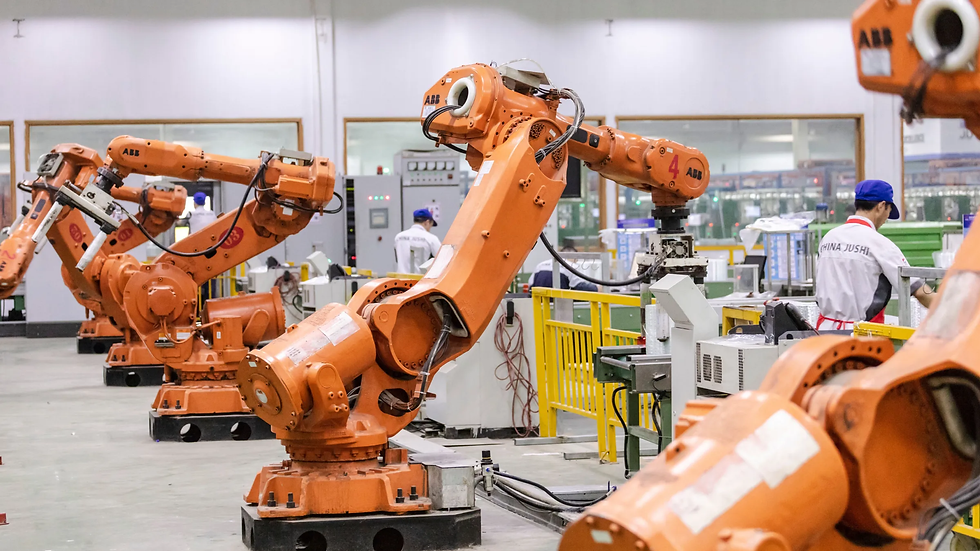
Yet, data silos and ownership issues pose potential obstacles. While China is data-rich, data from over 150 robot companies is scattered across client servers, forming isolated pockets. For example, Unitree sold 5,500 humanoid robots in 2025, but their data lacks unified flow; CATL's assembly data belongs to Qianxun Intelligent. Factory data often includes trade secrets, like welding parameters or yields, making enterprises reluctant to share—a factory owner refusing to sell 50,000 lines of welding data is a typical case. Standards from bodies like the Ministry of Industry and Information Technology could address format compatibility, but the absence of ownership mechanisms mvight slow the data flywheel. This challenge invites exploration: How to design incentive structures that promote data collaboration without harming commercial interests?

Additionally, hidden risks deserve attention. NVIDIA's Isaac simulation platform dominates global robot physical simulations, with its parameter libraries (like friction coefficients) serving as another "mine." If U.S. restrictions limit access, China's training efficiency for humanoid robots could suffer. On the hardware side, China's supply chain advantages are pronounced: humanoid robot shipments account for 80% of the global total (Agibot at 30%, Unitree at 26%), and actuators hold 63% market share. Unitree humanoid robots are priced at $5,900 to $13,500; if Tesla shifts supply chains, costs could rise from $46,000 to $131,000. China's industrial robot density stands at 470 per 10,000 workers, with 295,000 installations in 2024 exceeding the global remainder. "Dark factories" like Changan Automobile's 2,000-robot collaboration assemble a car every 60 seconds, reducing costs by 20%, potentially disrupting "friendshoring" models.

Within this hardware edge, CATL's role is particularly crucial in advancing humanoid robots. As the world's leading battery supplier, its factory applications of humanoid robots not only boost production efficiency but also offer insights for downstream industries. For instance, REBIO's BYD electric truck (Electric Truck) and special purpose vehicle (SPV) businesses not only incorporate CATL's battery cells but also benefit from humanoid robot flexible assembly techniques. This essentially enables REBIO to begin providing full-process solutions for pure electric trucks from China to large European commercial vehicle leasing companies as early as 2026, encompassing everything from battery integration to vehicle maintenance. Such integration could accelerate the global penetration of electric commercial vehicles, lowering logistics costs, carbon emission and enhancing sustainability.


Broader trends indicate that humanoid robot infiltration into factories will reshape production lines: factories optimized for humanoid robots, which in turn adapt to factories. Whoever first defines standards for actions like "grasp, release, insert, twist" could secure two decades of industrial discourse power. China leads in hardware, but must address data silos and ownership; the U.S. has unified pipelines, but the data mines have shifted to China.
Ultimately, humanoid robots conquering flexible operation barriers (like CATL's plug insertion) unleash manufacturing multiplier effects, as wars prove speed trumps sophistication, with China's data mines and hardware advantages dominating, but data silos, ownership, and NVIDIA risks standing as hurdles. The final competition extends beyond efficiency/cost to who defines the next 20 years of industrial standards: If Chinese humanoid robots penetrate global factories first, manufacturing will evolve along Chinese supply chain logic, embedding native software ecosystems.
Presumably, this is why German Chancellor Friedrich Merz, as the first foreign head of state to visit China after Chinese New Year of the Horse, insisted on including a visit to humanoid robots companies in his tight schedule. After all, Germany's Industry 4.0 vision, proposed years ago, seems to require integration with China's intelligent manufacturing to be truly realized.
As global financial capital, industrial capital, and even everyday observers engage in lively discussions about humanoid robots over coffee or in casual conversations, one question that appears to receive less attention deserves consideration: Given that robots serve as tools and companions to humanity, how essential is it to design them in a humanoid form?
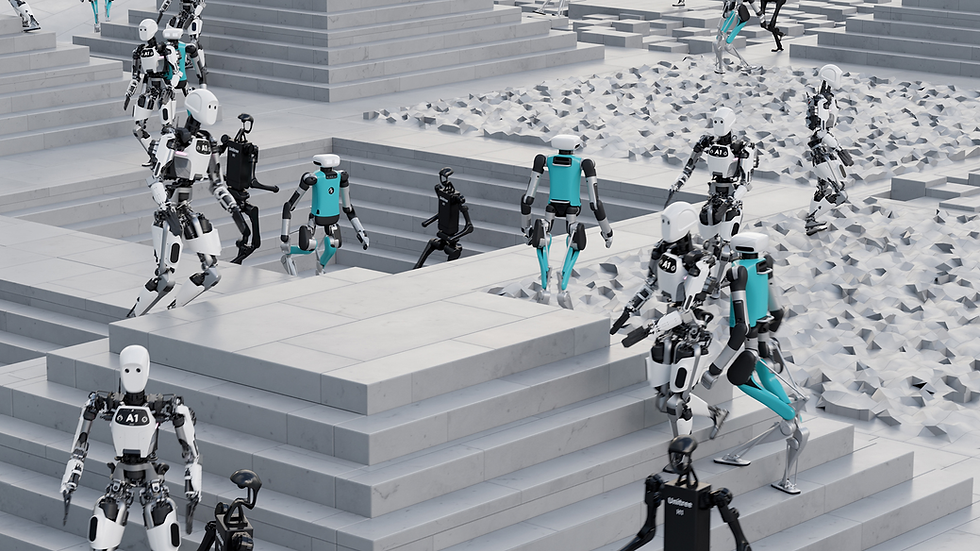
The bipedal configuration central to most humanoid robots—enabling upright posture, walking, and complex maneuvers—entails substantial engineering and financial demands. Industry analyses indicate that maintaining dynamic balance in humanoid robots requires continuous energy expenditure and sophisticated control systems, unlike wheeled or quadruped alternatives that achieve passive stability on level surfaces. Estimates from various sources place current unit costs for advanced humanoid robots in the range of $50,000 to $200,000 or more, with actuators, joints, and balance mechanisms contributing significantly to these figures. In contrast, specialized non-humanoid systems, such as collaborative robotic arms or autonomous mobile platforms, often deliver comparable or superior performance for targeted tasks at 40% to 60% lower cost, benefiting from established supply chains and higher uptime reliability.
Proponents of the humanoid robot form argue that it aligns with environments built for humans—factories, homes, offices, and public spaces—allowing seamless integration without extensive infrastructure modifications. Tasks involving doors, stairs, elevators, or irregular manipulation may favor bipedal dexterity and reach. However, critics point out that for the majority of industrial and commercial applications, task-specific designs—wheeled bases, fixed manipulators, or quadruped platforms—provide greater efficiency, energy conservation, and safety certification pathways, often achieving 80% of desired functionality at a fraction of the expense.
This debate extends beyond economics to fundamental design philosophy: Should robotics prioritize mimicking human anatomy, inheriting its complexities and limitations, or optimize purely for function? As humanoid robot deployments accelerate in pilot programs across manufacturing and logistics, the trade-offs between versatility and cost-effectiveness remain under active scrutiny.
The industry continues to evolve rapidly, with projections suggesting cost reductions through scale and technological refinements. Yet the core inquiry persists: In pursuing ever more capable machines, is the humanoid shape a necessary path, or might alternative forms prove more pragmatic for many real-world needs?



Comments