[Insight] Beyond Involution: The Next Blue Ocean Market of Australia Solar Energy Storage for Household Lies in Overlooked Remote Areas
- Matthew Dung

- Nov 17, 2025
- 4 min read

When we discuss the Australian solar and energy storage market, what often comes to mind are the gleaming solar panels on rooftops in affluent Sydney and Melbourne neighborhoods, along with household energy storage systems costing tens of thousands of Australian dollars. Australia has long been regarded as a "high-end player" in the global new energy sector.
However, this common market perception obscures a harsh reality: On this vast land, there exists a massive, systematically forgotten "energy poverty market"—Indigenous communities, remote areas, and expansive farms.
A recent report titled The Right to Power has peeled back a layer of this truth. For solar and energy storage companies entangled in fierce competition in urban markets, this overlooked demand represents an urgent "blue ocean" waiting to be explored.
The Hidden Harsh Reality: Prepaid Meters and 49 Power Outages Per Year
Statistics show that over 15,000 Indigenous households in Australia (affecting about 65,000 people) are still locked into an extremely inhumane power supply model—the prepaid meter system. This system shifts the full responsibility and risk of "staying connected" onto users. Once the prepaid credit runs out, household electricity is automatically cut off without mercy.
These challenges are concentrated in Australia's most remote and infrastructure-weak regions: the Kimberley region in Western Australia, the vast Northern Territory (NT), Far North Queensland, and South Australia's APY Lands and far west coast communities. These areas are precisely where Australia's energy infrastructure is most vulnerable.
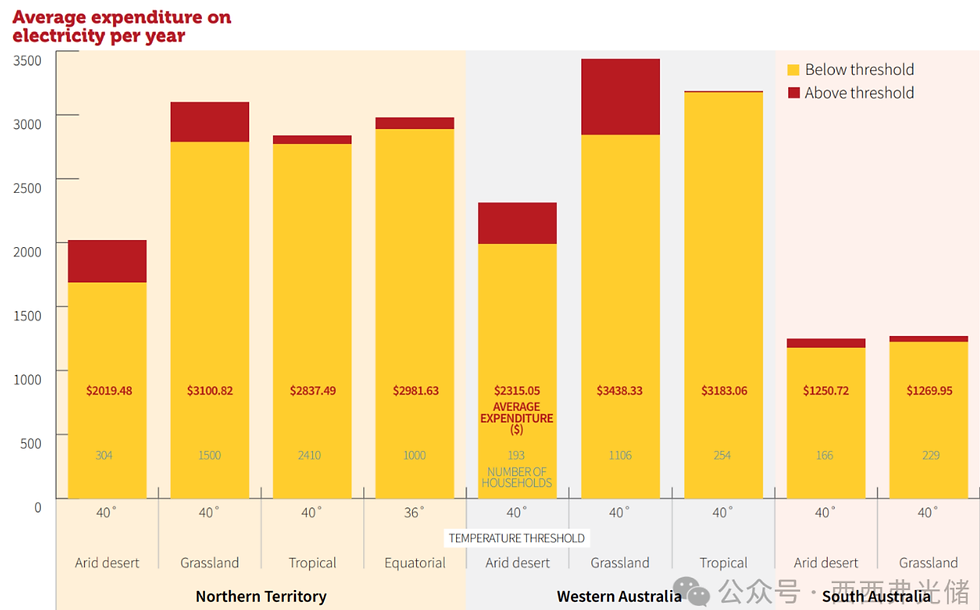

The data revealed in the report points directly to the severe challenges faced by these communities:
Over a 12-month period, three states and territories experienced a total of 440,000 power outage events. Households in prepaid communities endure an average of 49 outages per year—nearly once a week. In the Northern Territory, the situation is particularly dire, with outage frequencies reaching up to 59 times annually, and recovery times often exceeding two hours.
Extreme heat as a trigger: High temperatures act as a catalyst for outages. When temperatures exceed 40°C, outage rates double significantly. In central Northern Territory, high-energy-use households face a one-in-three chance of same-day disconnection during scorching weather.
Survival crises and vulnerabilities: Outages directly impact household health and well-being. 77% of surveyed households are most concerned about food spoilage and the inability to safely store critical refrigerated medications like insulin. The report explicitly states that such frequent energy interruptions constitute serious public health and safety incidents.
Economic burdens and technological barriers: These households not only face the risk of energy disruptions but also bear heavy financial loads: average annual electricity bills exceed AUD 2,700, with a quarter of households paying over AUD 4,000. Worse still, 95% of users rely on physical stores for recharges. Once transportation or networks are disrupted, they immediately face outages, with technology and geography forming a dual shackle.


Industry's Strategic Turning Point: A Vast "Off-Grid" New Frontier
When viewing Australia through a broader market lens, the plight of Indigenous communities is just the tip of the iceberg. The entire market opportunity can quickly expand to the "off-grid market" across remote areas, primarily manifested in three interconnected segments:
Indigenous Communities: As revealed in the report, these inland communities face mandatory prepaid systems, extremely high outage rates, and burdensome electricity costs. What they need most are community microgrids and affordable solar leasing models. 73% of surveyed households believe solar can provide cheaper electricity.
Remote Areas (Outback): This includes vast inland towns, remote tourism camps, and many small mining sites. The biggest pain point here is heavy reliance on expensive diesel generators or connections to costly and unstable existing grids (such as single-wire earth return or SWER systems). The market opportunity lies in providing hybrid microgrids (solar-storage + diesel) and highly reliable standalone power systems (SPS), completely replacing costly fuel consumption.
Farms and Pastoral Areas (Agricultural): This particularly refers to large ranches and farms in New South Wales, Queensland, and Western Australia. These farms have enormous energy demands for irrigation, cooling, and more, yet they endure extremely high grid peak-hour prices and are often at the grid's end, with poor power quality and stability. The opportunity here is in commercial and industrial (C&I) solar-storage solutions, using energy storage and photovoltaics for peak shaving and self-sufficiency, providing economical and stable energy for agricultural production.

’The common thread among these three segments is that centralized grids cannot offer reliable or economical solutions. Therefore, decentralized clean energy approaches (photovoltaics + energy storage + microgrids/standalone systems) represent the optimal path forward.
The report's third core recommendation—removing barriers to allow customers to access consumer energy resources including rooftop solar, storage, and community microgrids—is precisely the policy window that businesses should seize.
Proven Success Models:
Marlinja Microgrid (Northern Territory): As Australia's first Indigenous-owned and grid-connected solar microgrid project, it provides a mature example for addressing community energy issues.
South Australia's RAES Program: This project uses microgrid technology to deliver electricity at an extremely low rate of 10 cents per kilowatt-hour, fundamentally transforming local energy burdens.
Market Observers Conclude: The Right to Power is the Right to Business
For energy storage and solar companies facing profit bottlenecks in urban markets, this report offers a clear strategic perspective. In Australia's solar-storage industry, this "energy poverty" region should no longer be seen as a remote corner but as a market ripe for development, with clear social value and commercial potential. As mainstream urban markets become increasingly saturated, shifting focus to these overlooked, urgently needy remote communities—using photovoltaics, energy storage, and microgrid technologies to provide reliable and affordable clean energy solutions—is not only a corporate social responsibility but also a key opportunity for the industry to find new growth curves in Australia.
For visionary solar-storage enterprises, the untapped market awaits in the Outback.
For cutting-edge solutions in solar and energy storage tailored to remote and off-grid needs, explore Kada's innovative offerings and join the movement toward sustainable energy. Visit Kada Energy today to learn more and get started.

![[Insight] Q3 Central and Eastern Europe Commercial Battery Storage: Poland Reigns as Revenue Powerhouse](https://static.wixstatic.com/media/353844_035d6f77835a49708452be9bcb6d5ac8~mv2.png/v1/fill/w_980,h_427,al_c,q_90,usm_0.66_1.00_0.01,enc_avif,quality_auto/353844_035d6f77835a49708452be9bcb6d5ac8~mv2.png)


Comments