[Insight] Thailand’s Energy Revolution: Solar, Storage, and Tax Incentives Drive Green Transformation


Bangkok, September 15, 2025 – Thailand is accelerating its energy transition with ambitious policies and economic incentives, positioning itself as a key player in Southeast Asia’s renewable energy landscape. From floating solar projects to large-scale energy storage and innovative tax reforms, Thailand is seizing a critical window of opportunity to advance its photovoltaic (PV) and energy storage markets, aligning with its climate goals of reducing greenhouse gas emissions by 30% by 2030 (potentially 40% with international support), achieving carbon neutrality by 2050, and net-zero emissions by 2065.
Policy Framework Fuels Renewable Energy Growth
Thailand’s energy roadmap, outlined in the National Energy Plan (NEP) and the Power Development Plan (PDP 2024-2037), emphasizes a significant increase in renewable energy’s share of new power generation, targeting a substantial rise by 2037. The Alternative Energy Development Plan (AEDP 2024 Draft) sets a bold goal of 38.97 GWp of solar capacity by 2037, including 2.79 GWp of floating solar integrated with hydropower. Policy mechanisms are shifting from traditional Feed-in-Tariff (FiT) subsidies to a combination of Utility Green Tariff (UGT) and Direct Power Purchase Agreements (Direct PPA), catering to the growing green energy demands of data centers and multinational manufacturers.
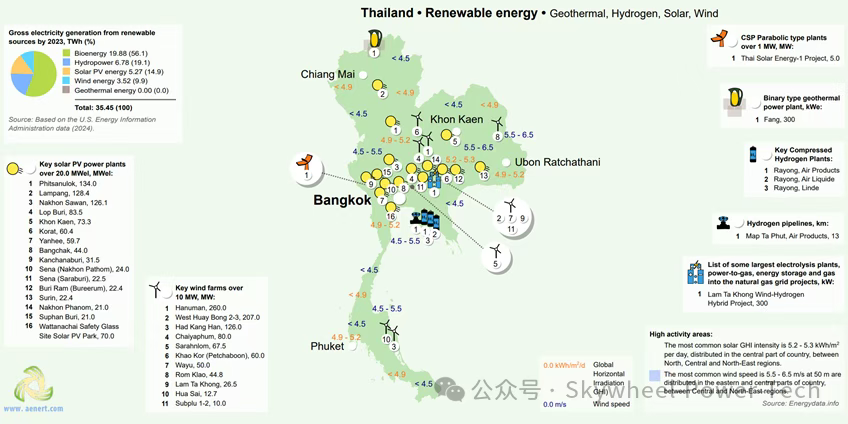
From 2022 to 2030, Thailand has launched a “fuel-cost-free renewable energy FiT” tender, allocating approximately 5 GW, including 2.37 GW for ground-mounted solar and 1 GW for PV-plus-storage projects contracted through SPP/VSPP channels. These projects, managed by EGAT, PEA, and MEA, require guaranteed output during specific periods to enhance grid reliability. Additionally, the Net Billing policy for residential PV (2019–2024) achieved its 90 MW quota, with plans to raise the annual distributed generation quota to at least 400 MW and explore flexible commercial models for surplus grid exports.
A groundbreaking tax incentive scheme further catalyzes this transition. Approved by Thailand’s cabinet, it offers personal income tax deductions up to 200,000 THB (approximately 3.9 million CNY) for residential rooftop PV installations (up to 10 kWp, grid-connected) and a 1.5x tax deduction for businesses investing in energy-efficient equipment certified as “Energy Efficiency Level 5” by the Ministry of Energy. These measures aim to reduce energy costs, enhance energy security, and stimulate the green economy, aligning with Thailand’s PDP goal of 51% renewable energy generation by 2037.
Solar and Storage: A Cost-Competitive Future
Thailand’s abundant solar resources, with annual irradiation exceeding 1,850 kWh/m² in multiple provinces, provide a technical potential of hundreds of gigawatts. By 2023, cumulative PV capacity reached 5,034 MWp, with the AEDP targeting an additional 34 GWp by 2037, potentially reaching 54 GW under optimistic scenarios. The levelized cost of electricity (LCOE) for PV-plus-storage systems is expected to fall below that of new fossil fuel plants by 2025, driven by declining battery costs and efficiency improvements. A conservative estimate suggests that 30% of new PV capacity paired with 2-hour storage could yield 10–12 GW of battery power and 20–24 GWh of energy capacity by 2037.

Thailand’s grid flexibility is bolstered by three existing pumped storage hydropower plants (1.5 GW/6 GWh) and three planned projects (2.5 GW/19.8 GWh). Electrochemical storage complements these, providing intraday flexibility and rapid response. “PV-plus-storage” and “floating PV-hydropower hybrid” configurations are emerging as dominant technical routes, supported by financing from institutions like the Asian Development Bank (ADB) through long-term loans and credit enhancement tools.
Chinese Enterprises Seize Market Opportunities
Chinese companies view Thailand as a strategic hub for ASEAN and North American markets, leveraging local incentives like BOI tax benefits and ASEAN’s favorable tariff structures. Notable investments include:
BYD: A 150,000-unit EV factory in Rayong, fostering a battery and storage ecosystem.
NV Gotion (Gotion High-Tech and PTT): A battery plant in Rayong serving EV and storage markets.
Canadian Solar: A 5 GW N-type wafer and TOPCon cell production line in Chonburi.
Trina Solar: Operating since 2015, with 6.5 GW capacity across Thailand and Vietnam, adjusted in 2024 due to trade dynamics.
Sungrow: Local manufacturing of inverters and storage systems for utility and commercial projects.
LONGi: Promoting high-efficiency modules for commercial and rooftop applications with localized channels.
These moves address rising green energy demand and navigate trade policies, such as U.S. anti-dumping measures, by optimizing traceable, low-carbon supply chains.
Market Entry and Investment Strategies
Priority Sectors: Focus on utility-scale ground-mounted PV, PV-plus-storage tenders, and commercial rooftop systems, particularly in industrial parks, high-energy-consumption zones, and reservoirs suitable for floating PV.
Business Models: Form joint ventures with local utilities or conglomerates, covering investment, EPC, and O&M, and offer structured solutions like zero-down leasing or energy price differential contracts for self-consumption.
Localization and Compliance: Establish local assembly and maintenance bases, use traceable and low-carbon-certified products, and adhere to permitting, environmental, and grid connection regulations.
Technology and O&M: Deploy N-type high-power modules, redundant inverter designs, and flood-resistant systems suited for Thailand’s hot, humid, and typhoon-prone climate. Prioritize long-life, high-capacity batteries with robust fire safety for storage.

Industry Event: ASEAN Solar and Storage Expo 2026
The 2026 ASEAN Smart Energy and Storage Expo (ASEE), set for March 25–27, 2026, at Bangkok’s IMPACT Exhibition Center, will be a pivotal platform for global energy players. Spanning 30,000 m² with over 400 exhibitors, it will showcase solar PV, batteries, biomass, wind, EVs, smart grids, and clean energy solutions, fostering trade connections across ASEAN and beyond. This event underscores Thailand’s role as a renewable energy hub, inviting stakeholders to capitalize on the region’s green energy boom.
Conclusion: A Golden Window for Growth
Thailand’s energy market is at a turning point, driven by policy support, economic competitiveness, and robust resources. With PV as the most cost-effective new power source and storage gaining traction, the country offers a GW-scale market for the next 10–15 years. Chinese enterprises, leveraging manufacturing prowess and localization strategies, are well-positioned to lead. To explore innovative solutions and stay ahead in this dynamic market, visit Kada Energy at kadaenergy.com for cutting-edge energy solutions driving a sustainable future.


Comments