Global Fiber Optic Cables Shortage Intensifies Amid Surging AI Demand and Geopolitical Pressures

Updated: 3 days ago

The global market for fiber optic cables is experiencing notable supply tightness, a development propelled by the rapid expansion of artificial intelligence infrastructure together with growth across other application areas. According to data compiled by multiple international research organisations, prices for fiber optic cables have trended upward in numerous regions worldwide since the third quarter of 2025, accompanied by extended delivery lead times. These conditions are affecting telecommunications operators’ network modernisation programmes and are placing constraints on data-centre construction and emerging digital initiatives. Government policymakers and senior executives at companies may therefore find it useful to track the evolving supply–demand balance for fiber optic cables in order to inform forward-looking supply-chain security measures and capital-allocation decisions.
The fiber optic cables sector has long displayed cyclical behaviour. Between 2016 and 2018, China’s Broadband China strategy accelerated fibre-to-the-home roll-outs, with procurement volumes from major operators such as China Mobile rising from 51.12 million core-kilometres to approximately 196 million core-kilometres and pushing prices for fiber optic cables above 116 yuan per core-kilometre at peak. Oversupply subsequently emerged in 2019, bringing prices down to around 41 yuan per core-kilometre. Demand from 5G base-station backhaul helped stabilise the market between 2020 and 2021. The present cycle is distinguished by artificial-intelligence-led consumption, which exhibits greater resilience than earlier telecommunications-driven phases. China’s National Bureau of Statistics reports optical-cable output at 251 million core-kilometres, a modest 5.3 percent decline from the prior year, while actual demand reached approximately 282 million core-kilometres; the gap was bridged through inventory draw-downs and imports.

Demand for fiber optic cables is being led by artificial intelligence data centres. Hyperscale facilities require substantial volumes of high-density, low-loss fiber optic cables to support non-blocking interconnects in Scale-out architectures, vertical expansion in Scale-up configurations, and data-centre interconnect (DCI) links. North America is particularly active, with several hyperscalers raising capital expenditure. Public records show Meta Platforms has concluded a fiber optic cables supply agreement with Corning valued at up to USD 6 billion through 2030. Corning’s chief executive, Wendell Weeks, has noted that hyperscalers are positioned to become one of the company’s largest customer segments. The firm also anticipates that enterprise networking activity during the Scale-up phase could reach two to three times current levels, while the DCI segment alone may exceed USD 1 billion.

Specialised fiber optic cables are additionally seeing uptake in drone and defence applications. In contexts such as the Russia-Ukraine conflict, fibre-guided FPV drone systems have generated robust requirement for bend-insensitive G657.A2 fiber optic cables capable of control ranges extending tens of kilometres. Russian consumption of fiber optic cables reached approximately 60 million kilometres in 2025, equivalent to 10.5 percent of global output — a marked rise from under 1 percent in earlier periods. China’s proposals under the 15th Five-Year Plan stress appropriately forward-looking deployment of new infrastructure, encompassing “AI+” programmes, 10-gigabit optical-network pilots and urban “millisecond-level computing power” projects, all of which are expected to underpin further domestic demand for fiber optic cables. Initiatives such as the East-Data-West-Computing project continue to add incremental volumes.
For fiber-optic drone users, fiber availability is only part of the reliability equation. Dynamic bending, spool winding quality, payout stability and complete-link performance can be just as important as the nominal fiber grade. Our latest analysis examines these issues in detail: [Fiber-Optic Drone Link Reliability: Why Dynamic Bending and Spool Quality Matter More Than Nominal Fiber Specifications].
When G.657.A2 Is in Short Supply, Is Another Fiber Grade an Option?
The shortage of G.657.A2 is beginning to create a second market response. Buyers are no longer looking only for additional G.657.A2 capacity; some system integrators are also asking whether the transmission system itself can reduce dependence on a single premium fiber grade.
This is where system-level compatibility becomes relevant. A recently introduced product, BendMate™ TC-HA-V3, takes this approach by supporting G.652.D, G.657.A1 and G.657.A2 single-mode fiber within the same fiber-optic video and control transmission platform.
BendMate™ incorporates proprietary Dynamic Optical Link Adaptation (DOLA™) Technology, which dynamically optimizes link performance according to different fiber characteristics and real-time link conditions, providing broader fiber compatibility and improved link stability under complex bending conditions.

The commercial implication is straightforward: when G.657.A2 availability tightens or its price rises sharply, users may have more sourcing flexibility instead of being locked into one fiber grade. This does not mean that G.652.D, G.657.A1 and G.657.A2 are technically identical; bend performance and link margin still matter. It means that a transmission system designed around a broader optical operating window can give integrators more options when fiber supply conditions change.
For buyers dealing with volatile fiber availability, that can turn the question from “Where can we find more G.657.A2?” into “Which combination of fiber grade and transmission system gives us the most reliable and economical link?”
REBIO can provide international availability and procurement information for BendMate™ TC-HA-V3, together with suitable G.652.D, G.657.A1 and G.657.A2 fiber options.

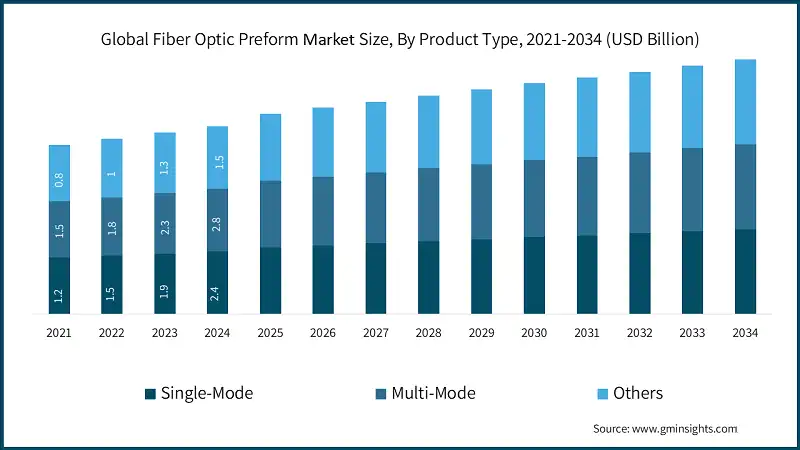
Supply-side conditions remain structurally constrained. China, the world’s largest producer of fiber optic cables, maintains theoretical preform capacity of roughly 14 000 tonnes and effective capacity of about 11 000 tonnes, supporting output of approximately 330 million core-kilometres. Capacity-expansion cycles typically span one to two years and involve elevated technical barriers, especially for premium G654.E ultra-low-loss, G657-series bend-insensitive, and emerging hollow-core fiber optic cables. Raw-material pressures are evident: helium prices have risen 135 percent over the past two years owing to plant curtailments, while silicon tetrachloride prices have increased by as much as 50 percent, directly lifting production costs. High capacity-utilisation rates, combined with prioritisation of higher-margin specialty items, continue to limit availability of standard specifications.
A concrete episode illustrates the current pressure on fiber optic cables availability. Ahead of the Chinese New Year, REBIO advised that they had received an urgent requirement for 300 000 kilometres of G657.A2 optical fibre. Although 30 000 kilometres of spot inventory could be offered as an emergency measure, the client ultimately declined the transaction, citing price levels that were considered unacceptable. This incident provides a vivid illustration of prevailing tightness in global fiber optic cables supply.



Chinese manufacturers maintain a commanding position in the international fiber optic cables supply chain. In the first eleven months of 2025, China exported 16.5425 million kilometres of optical cable, up 54.24 percent year-on-year, generating export revenue of 21.146 billion yuan, a 40 percent increase. Optical-fibre exports rose 47.1 percent and optical-preform exports advanced 89.5 percent. Principal destinations included India (48 percent of preforms), Indonesia, Poland, Mexico and Panama. Shipments of optical cable to Russia surged 801 percent to 3.27 million kilometres, while volumes to emerging markets such as Indonesia and Brazil also expanded strongly. Leading firms — Yangtze Optical Fibre and Cable, Hengtong Optic-Electric and Zhongtian Technology — have lifted the share of overseas revenue. Yangtze reported first-half overseas sales of 2.7 billion yuan, up 52.8 percent and representing a record 42.3 percent of total revenue.
Price movements mirror the underlying supply–demand imbalance. Globally, fiber optic cables prices have climbed from a 2021 low of USD 3.70 per fibre-kilometre to USD 6.30, a 70 percent increase, with the steepest rises recorded in Europe, India and China and an approximate 2 percent rise in the United States. In Russia, where domestic production has been impaired and reliance on Chinese imports is high, quotations have increased between 2.5 and 4 times. Data Center Dynamics has reported lead times extending to 20 weeks for large buyers and approaching one year for smaller purchasers.
Technological advances are introducing fresh momentum to the fiber optic cables market. Hollow-core fiber optic cables, offering latency of approximately 3.46 μs/km (roughly 30 percent lower than conventional fibres) together with reduced nonlinearity, are attracting interest from hyperscalers. Microsoft has indicated plans to deploy 15 000 kilometres internally within 24 months, while AWS is working with multiple suppliers to interconnect ten data centres. Chinese enterprises are progressing similar products in operator trial networks. High-core-count, reduced-diameter and OM5 multimode fiber optic cables are also addressing high-density cabling requirements inside data centres.
Regional divergences are pronounced. North America could encounter supply shortfalls in 2026, with demand growth projected at 22.2–24.6 percent potentially outstripping supply expansion of 11.6–19.2 percent. Russian telecommunications operators face elevated costs, prompting postponement or downsizing of selected projects. European fibre-to-the-home construction has moderated, yet data-centre demand provides partial offset. Emerging markets such as India are supplementing domestic capacity through imports.
Looking forward to 2026 and subsequent years, the fiber optic cables market is likely to remain in a state of relatively tight balance. Sustained artificial-intelligence capital expenditure, ongoing telecommunications and 5G/6G upgrades, and incremental contributions from applications such as drones are expected to provide baseline support. Elevated prices may nevertheless encourage measured capacity additions. International producers including Corning and Furukawa are scheduled to introduce incremental capacity progressively after 2028. Chinese manufacturers, benefiting from scale and cost advantages, are positioned to enlarge their international footprint further. Industry observers suggest that post-consolidation expansions tend to be more disciplined, which may help sustain reasonable profit margins. Should artificial-intelligence growth moderate or new capacity arrive earlier than anticipated, the supply–demand equilibrium could shift.
For government decision-makers, safeguarding fiber optic cables supply-chain resilience remains a priority that can be addressed through policies promoting domestic capacity development, research-and-development investment, and diversified international procurement. Executives at companies may wish to consider long-term framework agreements, strategic inventory buffers, and selective investment in advanced optical modules or alternative technologies such as hollow-core fiber optic cables, thereby mitigating disruption risks while positioning for digital-transformation gains. In summary, the present trajectory of the fiber optic cables market offers a representative view of the broader global shift toward high-performance digital infrastructure. Ongoing monitoring of factual data and objective analysis will continue to furnish a reliable foundation for informed decision-making.
Need More Flexibility Than G.657.A2?
Need More Information about G.657.A2?


Comments