[Insight] REBIO's Fixed-Wing VTOL Drone Selection Guide
- Richard Geng

- 20 hours ago
- 6 min read
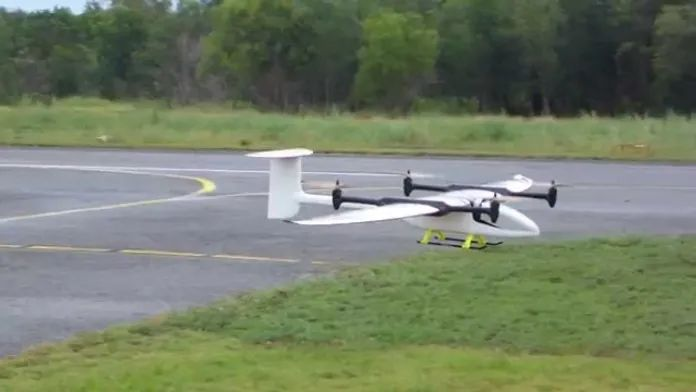
I. Overview of Core JT Series Model Parameters
Mode | Maximum Takeoff Weight | Effective Payload | Practical Ceiling | Max Flight Time | Wind Res Level | Takeoff & Landing Mode | Level Flight Power | Core Features |
|---|---|---|---|---|---|---|---|---|
JT-245 | 13.5kg | 3kg | 5000m | 240min | Level 6 | Vertical Takeoff and Landing | Electric Tail Pusher | Lightweight design, suitable for small-scale operations |
JT-300N | 20kg | 6kg | 5500m | 330min | Level 6 | Vertical Takeoff and Landing | Electric Tail Pusher | Independent replaceable camera bay, flexible payload swapping |
JT-370C | 28kg | 10kg | 6500m | 330min | Level 6 | Vertical Takeoff and Landing | Electric Tail Pusher | Delta wing structure, strong stability, suitable for full-frame cameras |
JT-380 | 35kg | 7.5kg | 5000m | 220min | Level 7 | Vertical Takeoff and Landing | Electric Tail Pusher | High wind resistance, suitable for complex weather conditions |
JT-450 | 45kg | 10kg | 5000m | 180min | Level 7 | Vertical Takeoff and Landing | Oil-Powered Tail Pusher | Hybrid oil-electric, high efficiency for long-distance operations |
JT-500 | 135kg | 35kg | 5000m | 600min | Level 7 | Vertical Takeoff and Landing | Oil-Powered Tail Pusher | Large payload and long endurance, strong multi-device integration capability |
II. Industry-Specific Model Recommendations
2.1 Surveying and Geographic Information Industry
Core Requirements
Positioning Accuracy: Must support RTK/PPK differential positioning, enabling centimeter-level data collection;
Payload Capacity: Must carry oblique photography cameras or LiDAR (single device weight 3-15kg);
Endurance and Coverage: Single flight must cover 50-300 square kilometers, with endurance no less than 240 minutes.
Model Recommendations
2.1.1 Small-to-Medium Scale Surveying (e.g., county-level cadastral surveys, engineering explorations)
Recommended Model: JT-300N
Reasons: Effective payload 6kg, capable of carrying medium-sized oblique cameras (e.g., Canon EOS series), endurance 330 minutes, single flight covers approximately 80 square kilometers; Independent replaceable camera bay design supports quick task equipment swaps, adapting to flexible surveying needs.

2.1.2 Medium-to-Large Scale Surveying (e.g., city-level topographic mapping, high-altitude plateau explorations)
Recommended Model: JT-370C
Reasons: Effective payload 10kg, capable of carrying full-frame mirrorless cameras + differential GPS systems, delta wing structure reduces air resistance, strong flight stability, high surveying data accuracy; Practical ceiling 6500m, suitable for complex terrains like plateaus and mountains, endurance 330 minutes covers 120 square kilometers.

2.1.3 Large-Scale Projects (e.g., provincial-level land surveying, urban 3D modeling)
Recommended Model: JT-500
Reasons: Effective payload 35kg, capable of simultaneously carrying oblique cameras + LiDAR, endurance 480 minutes, cruise speed 126km/h, single flight covers over 300 square kilometers; Carbon fiber composite fuselage with high strength, suitable for long-duration, high-intensity surveying operations.

2.2 Power Line Inspection Industry
Core Requirements
Anti-Interference and Environmental Adaptability: Must operate stably in strong electromagnetic environments like 500kV substations, with wind resistance no less than level 6;
Payload: Must carry visible light cameras + infrared thermal imagers (total weight 3-8kg), supporting close-range observation of wire breaks and insulator damage;
Efficiency: Single takeoff and landing must complete 50-100 kilometers of line inspection.
Model Recommendations
2.2.1 Medium-to-Low Voltage Line Inspection (e.g., 110kV county-level lines)
Recommended Model: JT-245
Reasons: Maximum takeoff weight 13.5kg, effective payload 3kg, capable of carrying small infrared thermal imagers; Endurance 240 minutes, single takeoff and landing completes 50 kilometers of line inspection, lightweight design for easy transport, suitable for township-level power inspections.

2.2.2 High-Voltage Line Inspection (e.g., 220kV-500kV city-level lines)
Recommended Model: JT-450
Reasons: Oil-powered tail pusher + electric quadrotor VTOL design, wind resistance level 7, cruise speed 95km/h, single takeoff and landing completes 80 kilometers of transmission line inspection; Effective payload 10kg, capable of carrying high-definition electro-optical pods, carbon fiber fuselage with strong anti-electromagnetic interference, suitable for high-voltage line strong electromagnetic environments.

2.2.3 Ultra-High Voltage Line Inspection (e.g., ±800kV inter-regional lines)
Recommended Model: JT-500
Reasons: Effective payload 35kg, capable of carrying AI intelligent recognition pods + LiDAR for real-time line defect identification; Endurance 480 minutes, completes 150 kilometers of ultra-high voltage line inspection, level 7 wind resistance suitable for complex weather in inter-regional areas.

2.3 Emergency Rescue Industry
Core Requirements
Rapid Deployment: Complete takeoff and landing preparations within 30 minutes, transport dimensions suitable for vehicle transport;
Payload and Functionality: Must carry electro-optical pods, communication relays, material delivery devices (total weight 5-20kg);
Environmental Adaptability: Wind resistance no less than level 7, operable in high-temperature, dusty, rainy, or snowy environments.
Model Recommendations
2.3.1 Small-to-Medium Scale Disasters (e.g., township landslides, small fires)
Recommended Model: JT-380
Reasons: Wind resistance level 7, transport dimensions 190cm×53cm×50cm, convenient for rapid vehicle deployment; Effective payload 7.5kg, capable of carrying personnel search and rescue payloads + loudspeakers, endurance 220 minutes, suitable for close-range disaster search and rescue and on-site command.

2.3.2 Medium-to-Large Scale Disasters (e.g., city-level floods, earthquakes)
Recommended Model: JT-450
Reasons: Oil-powered tail pusher design with endurance 180 minutes, effective payload 10kg, capable of carrying communication relay equipment to establish temporary communication links in disaster areas; Wind resistance level 7, suitable for complex post-disaster weather, has participated in Hubei Enshi geological disaster monitoring and Gansu emergency mission drills.
2.3.3 Major Disasters (e.g., massive earthquakes, inter-provincial forest fires)
Recommended Model: JT-500
Reasons: Effective payload 35kg, capable of simultaneously carrying public network base stations + material delivery devices + high-definition electro-optical pods, endurance 480 minutes, providing long-duration communication support and full-area monitoring in disaster zones; Has participated in Gansu Jishishan 6.2-magnitude earthquake and Inner Mongolia coal mine collapse rescues, with proven real-world performance.
2.4 Agricultural Monitoring Industry
Core Requirements
Payload: Must carry multispectral cameras (weight 1-3kg), supporting crop NDVI index collection;
Efficiency: Single flight covers 500-2000 mu of farmland, endurance no less than 180 minutes;
Flexibility: Capable of vertical takeoff and landing in narrow farmland areas, no need for runways.
Model Recommendations
2.4.1 Small-Scale Farmland (e.g., village-level 500-1000 mu orchards, vegetable bases)
Recommended Model: JT-245
Reasons: Effective payload 3kg, capable of carrying small multispectral cameras; Endurance 240 minutes, single flight covers 800 mu of farmland; VTOL design requires no runway, avoiding crop damage, suitable for dispersed small-scale planting areas.

2.4.2 Medium-Scale Farmland (e.g., township-level 1000-2000 mu field crops)
Recommended Model: JT-300N
Reasons: Effective payload 6kg, capable of carrying medium multispectral cameras + GPS positioning modules, endurance 330 minutes, single flight covers 1500 mu of farmland; Replaceable camera bay design supports quick switching between multispectral and visible light equipment, adapting to monitoring needs at different crop growth stages.
2.4.3 Large-Scale Farmland (e.g., county-level ten-thousand-mu contiguous corn or rice fields)
Recommended Model: JT-370C
Reasons: Effective payload 10kg, capable of carrying high-resolution multispectral cameras, delta wing structure for stable flight and high data collection accuracy; Endurance 330 minutes, single flight covers 2000 mu of farmland, practical ceiling 6500m, suitable for large-area operations in plain regions.
2.5 Oil and Gas Pipeline Inspection Industry
Core Requirements
Long Endurance and Long Distance: Single takeoff and landing completes 100-200 kilometers of pipeline inspection, endurance no less than 300 minutes;
Environmental Adaptability: Operable in harsh environments like deserts, plateaus, coastlines, with wind resistance level 7 and salt fog corrosion resistance;
Payload: Must carry gas leak detectors + infrared thermal imagers (total weight 5-10kg).
Model Recommendations
2.5.1 Inland Short-Distance Pipelines (e.g., 100km county-level gas pipelines)
Recommended Model: JT-370C
Reasons: Endurance 330 minutes, single takeoff and landing completes 120 kilometers of pipeline inspection; Effective payload 10kg, capable of carrying gas leak detectors + infrared thermal imagers; Carbon fiber fuselage resistant to dust corrosion, suitable for inland desert and loess plateau environments.
2.5.2 Inter-Regional Long-Distance Pipelines (e.g., 200km city-level oil pipelines)
Recommended Model: JT-500
Reasons: Endurance 480 minutes, cruise speed 126km/h, single takeoff and landing completes 200 kilometers of pipeline inspection; Effective payload 35kg, capable of carrying high-precision gas sensors + SAR radar, level 7 wind resistance and salt fog resistant design, suitable for coastal and plateau inter-regional pipelines.
III. Selection Decision Process
Clarify Core Requirements: Prioritize determining the operational scenario (e.g., surveying/inspection), operational range (single flight coverage area), payload type (cameras/radar/communication equipment);
Match Key Parameters: Align with "effective payload - endurance - wind resistance - ceiling" based on needs, e.g., prioritize JT-370C for plateau scenarios (6500m ceiling), JT-380/JT-450/JT-500 for high-wind scenarios (level 7 wind resistance);
Balance Cost and Efficiency: Select JT-245/JT-300N for small-to-medium projects (high cost-effectiveness), JT-370C/JT-450 for medium-to-large projects (balanced performance), JT-500 for major projects (large payload, long endurance);
Reference Real-World Cases: Prioritize models with industry application cases, e.g., JT-450 (cooperation with Hubei Surveying Institute), JT-500 (National Emergency Management Department rescue projects).
IV. Supporting Services and Support
Provide full lifecycle services to ensure post-selection implementation:
Technical Support: 7×24-hour service, offering remote debugging and on-site troubleshooting;
Customization: Support payload customization and mold design;
After-Sales Guarantee: Free repairs/replacements of parts during warranty period, rapid accessory supply to ensure continuous equipment operation.
Visit Drone & Anti-Drone page, for more information.
Also, we been dedicated to researching, developing, and manufacturing Unmanned Ground Vehicles (UGVs) for many years. In China, we hold a significant market share of at least 80% for light and medium UGV chassis.


![[News] Global Premiere | Ton-Level Wide-Area Heavy-Oil Heavy-Load UAV Hump 1000H Officially Released](https://static.wixstatic.com/media/100ece_76634c764f294c60878dbcea0c6ba064~mv2.jpg/v1/fill/w_980,h_551,al_c,q_85,usm_0.66_1.00_0.01,enc_avif,quality_auto/100ece_76634c764f294c60878dbcea0c6ba064~mv2.jpg)

Comments